
Roots Blower Compressor Basics: A Comprehensive Guide
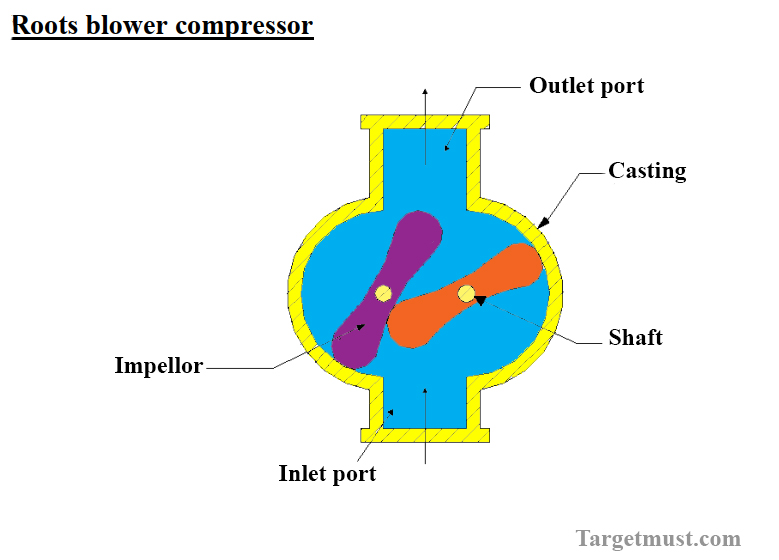
Roots Blower Compressor The Roots blower is a valveless displacement compressor with no internal compression. Blowers are generally air-cooled and oil-free. Although two- and three-stage versions are available, their low efficiency limits these blowers to very low-pressure applications and single-stage compression. Roots blowers are often used for vacuum pumps and pneumatic conveying. Key Highlights Roots blowers are a type of positive displacement (PD) blower that have been around for over 150 years. These blowers are ideal for applications that require variable flow and pressure. The primary advancement in lobe technology over the years has been focused on noise reduction. Roots blowers are typically oil-free and air-cooled technologies. They are frequently used as vacuum pumps and for pneumatic conveyance. Roots blowers have low efficiency and high noise levels compared to other types of compressors. Introduction Roots blowers, also known as lobe blowers, are a type of positive displacement (PD) blower that have been in use for over 150 years. These blowers operate on the principle of displacement compression, making them ideal for applications that require variable flow and pressure. The primary focus of innovation in roots blower technology has been on noise reduction rather than improving efficiency. The roots blower compressor consists of two identical, usually symmetrical, counter-rotating rotors that work in a housing, synchronized by means of a set of gear wheels. These blowers are typically oil-free and air-cooled, making them suitable for a wide range of applications. They are widely used as vacuum pumps and for pneumatic conveyance. One of the key characteristics of roots blowers is their low efficiency compared to other types of compressors. This limits their use to applications requiring very low pressure and single-stage compression. Despite their lower efficiency, roots blowers are popular due to their reliability, low noise levels, and ability to handle variable flow and pressure requirements. In this blog, we will explore the mechanics of , including their principle of operation and key components. We will also discuss the advantages of using roots blowers, their common applications, and important technical specifications to consider. Additionally, we will provide installation and maintenance best practices, as well as troubleshooting tips for common issues. The Mechanics of Roots Blower Compressors Roots blowers, classified as a type of positive displacement (PD) blower, function based on the concept of displacement compression. These blowers are comprised of two rotors that rotate in opposing directions within a housing. During operation, air is sucked into the compression chamber as the rotors revolve, and it gets compressed as the chamber’s volume diminishes. The compressed air subsequently returns to the housing from the pressure side for additional compression. Notably, this compression transpires against full counter-pressure, leading to low efficiency levels and generating high noise levels. Roots blowers find applications across various industries due to their ability to deliver consistent airflow at constant pressure levels. They are commonly used in wastewater treatment plants, pneumatic conveying systems, and industrial vacuum applications. Despite their drawbacks in terms of efficiency and noise levels, roots blowers remain a popular choice for applications requiring continuous and reliable airflow. Manufacturers are continuously working on innovations to improve the efficiency and reduce the noise produced by roots blowers to make them more environmentally friendly and sustainable for different industrial processes. The Principle of Operation The principle of operation of roots blowers involves the movement of air through a compression chamber. As the rotors of the blower spin, air is drawn into the chamber through the inlet port. The rotors then compress the air by reducing the volume of the chamber. This continuous rotation and compression process result in the generation of a low-pressure air flow. It’s important to note that roots blowers do not have internal compression, and the compression occurs against full counter-pressure. This limits their efficiency and makes them suitable for applications requiring very low pressure and single-stage compression. Key Components and Their Functions Roots blowers consist of several key components that work together to facilitate the compression and movement of air. The main components include the rotors, housing, inlet port, outlet port, and compression chamber. The rotors are the central components of the roots blower and are typically identical and counter-rotating. They are responsible for drawing in air, compressing it, and moving it through the blower. The housing holds the rotors in place and provides a controlled environment for the compression process. The inlet port allows air to enter the blower, while the outlet port allows compressed air to exit. These ports ensure the proper flow of air through the blower. The compression chamber is the space between the rotors where the air is compressed. It decreases in volume as the rotors rotate, resulting in the compression of the air. Each of these components plays a crucial role in the overall operation of the roots blower, ensuring the effective compression and movement of air. Advantages of Using Roots Blower Compressors Roots blowers offer several advantages that make them a popular choice in various industries. One of the key advantages is their ability to handle variable flow and pressure requirements, making them ideal for applications that require flexibility. Additionally, roots blowers are known for their low noise levels, making them suitable for environments where noise reduction is a priority. They are also reliable and have low maintenance requirements, providing long-lasting performance. Furthermore, roots blowers are commonly used in pneumatic conveyance applications due to their positive displacement technology. Efficiency in Varied Applications While roots blowers have lower efficiency compared to other types of compressors, they offer advantages in specific applications. One such application is pneumatic conveyance, where roots blowers excel due to their positive displacement technology. They provide consistent and reliable airflow, making them suitable for conveying bulk materials in industries such as cement, food processing, and wastewater treatment. Roots blowers are also used in vacuum boosters, where they assist in improving the performance and efficiency of vacuum systems. They are commonly employed in gas applications where a low-pressure air flow is required, such as in the oil and … Read more